IKEA Sofa Makeover: Tufted Midcentury Modern

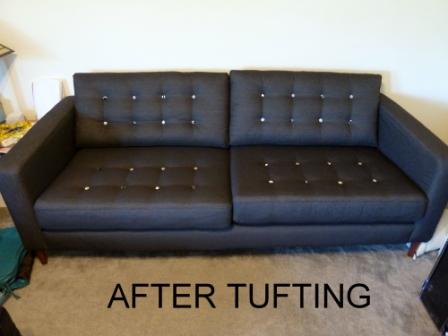
IKEA Karlstad sofa makeover with button tufting

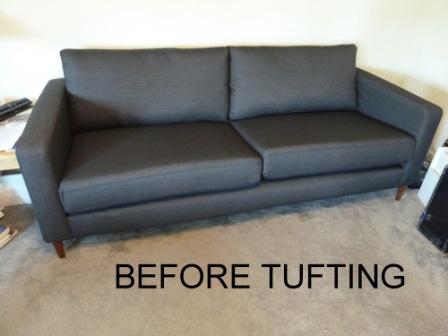
IKEA Karlstad sofa before button tufting

Warning: This is a very long post. However, that’s because it’s packed with a lot of information. This was quite an undertaking that took a lot of research. It wasn’t difficult, just time consuming. I am giving all the gory details in case you’d like to replicate the process, but if you’re only mildly interested, just look at the pictures.

I think button tufted sofas are very classy looking, and have wanted one in my living room for some time. However, there were three hurdles to overcome before that could happen.

Hurdle one is named Carolina. Our cat still has her claws, and while she doesn’t annihilate furniture, she is known to give it an occasional swipe. I’m constantly telling her she’s why we can’t have nice things. She certainly is why I’ll never own leather furniture, and a lot of the button tufted sofas are leather.

Problem number two is comfort. For some reason all of those buttons often lead to a sofa that’s part décor/part torture instrument. I was willing to forgo a great deal of cushiness for aesthetic value, but the husband was not.

The final and biggest hurdle was price. I swear those buttons are made out of unicorn tears or something, because tufted sofas seem to run around $2000. I am cheap. I was not doing that. Especially since I wanted to buy two sofas at once for my living room.

I was sure I was just going to be saving my pennies for decades or settling for something else.  Then I found this informative blog post about how someone button tufted an IKEA Karlstad sofa. This solved all of my problems at once. It was fabric, very comfy, and affordable. The people at the Our Mid Century blog were fortunate enough to find an upholster to put their buttons on for them for a mere $40. If you can find someone to do it for that price, PAY IT!

If, like me, no super cheap upholsters are handy or if you also want to be a nut and do lots of different fabric buttons, read on. I’m going to tell you how I did this step by step, including where I was able to buy all the materials online. That took me nearly as long as anything.

Step One: Decide what legs you want on your sofa. You’d think it would be buying the sofa at IKEA, but you’d be wrong. The legs on the Karlstad sofa look roughly like someone slapped the ends of 2×4’s on the bottom because the designer got tired and didn’t care anymore. More likely, it’s a cost saving measure, but just changing out the legs on the sofa make a huge difference.

IKEA sofa leg compared to Uncle Bob's replacement legs

You can go two routes here. One is Pretty Pegs. They’re a Swedish company that wisely noticed that IKEA almost universally makes ugly legs for its furniture. All they make is replacement legs that screw right into your IKEA furniture. They come in a number of set models and would likely ship them to you in a timely manner. However, a set of pegs (four) runs you a little over a hundred dollars. This seemed a bit excessive to me, so I went with Uncle Bob.

Who in the world is Uncle Bob? Uncle Bob is some guy in Texas who has a very old looking website that you’d swear is defunct. However, Bob also makes very classy looking custom replacement IKEA legs in a number of woods, stains, and heights. I got the poplar wood, 5 ½ inch, full taper, medium brown stain. For a set of four, Bob charged me the super reasonable price of $36 plus $6 flat rate priority shipping.

The one drawback is that Bob makes all of his legs to order, and he’s a very busy man. I placed my order on April 15. Uncle Bob very kindly emailed me to let me know he had received my order and would put me on his schedule, and I should receive my couch legs in the second week of June. I did indeed receive them two months later as he said I would, and they were beautiful and screwed right into my sofa perfectly. Still, I wasn’t prepared to have to wait two months for couch legs.

Step Two: Decide what you want your buttons to look like. If you want your buttons to be the same solid color as your sofa, often you can get the IKEA customer service people to give or sell you fabric samples of whatever slipcover color you choose. Or, in a worse case scenario, you can purchase an ottoman slipcover, which are cheaper than the sofa slipcovers, and use that fabric to cover your buttons. Look on ebay and Craigslist before you shell out the full price bucks for this at IKEA, though. I noticed a lot of people selling brand new slipcovers on there.

I wanted my buttons to be more interesting than that. In truth, I’m tempted to buy sofas in wild colors and patterns, but the practical part of me usually wins out as I know whatever I pick out might be out of fashion before I can afford another sofa. Better to be bold with my throw pillows. Still, I needed my sofa to be a little bit fun. So, I decided to cover the buttons in a number of bold prints, just in neutral colors that would go well with the charcoal colored slipcover I had chosen (Sivik dark gray).
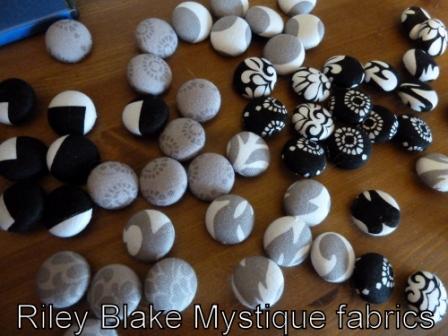
Buttons covered in Riley Blake Mystique fabrics

I decided on eight different fabrics that were all part of the same Riley Blake color way (a set of quilting fabrics designed to go together): Mystique Damask, Petal, Dot, & Stripe in Gray and Mystique Damask, Petal, and Stripe in Black and Medium Chevron in Black. I bought all of them at the Etsy shop Fabric Shoppe because they had the selection I wanted, good prices, were easy to work with, and they let me buy a just a quarter of a yard of all of those different fabrics. I purchased two of their Pick 4 quarter yard bundles ($10 a piece, plus $4.50 shipping).

You also need to decide how many buttons you want, and how big you want them. I liked the look of Our Mid Century’s sofa, so followed their lead, using eight ¾ inch buttons a side on each cushion. When you button tuft, you have to put buttons on both the front and back of the cushions. That meant I needed 16 buttons per cushion x 4 cushions = 64 buttons for one couch. I did two couches, so I had to make 128 fabric covered buttons.  The bad news is you have to make a ton of buttons.  The good news is you can rotate your cushions this way.  Get a stain on one side?  No problem, just flip it over.  Also, tufting the cushions will help them keep their shape longer, which sometimes can be a weakness of IKEA sofas.

Step Three: Make your buttons. I went ahead and did this while waiting on couch legs before purchasing the sofas. This is a process that is best done while also doing something else like half watching a movie you’ve already seen, listening to music, etc. You’ll likely have to do it in more than one session. My fingers gave out after awhile. You have to push on the buttons pretty hard.

Making the fabric buttons is not difficult. Many places sell a little fabric covered button kit that comes with a template for marking your fabric, the various pieces of the buttons themselves, and a little plastic piece for getting the button to come together. It’s easier to observe the process than explain it. Thankfully, someone has put together a handy dandy You Tube video that shows you exactly how to do it.

I bought my button supplies at the ebay store I Like Big Buttons (terrible name, I know). They were cheap, the transaction was easy, and they were the only ones I could find that would sell the buttons to me in the denominations I wanted. Seventy-five wire shank back buttons size 30 (3/4 inch) and the assembly tool will run you $19.70. Shipping is free. I had a couple of the buttons break on me while sewing them on, but by and large, I had no problems with the product. If you can recruit a button making helper, it’s well worth it to buy an extra assembly tool. I assumed I wouldn’t have anyone who would want to help with the mind-numbing chore. In fact, I had two people who were so interested in what I was doing that they offered to help and probably made at least half my buttons for me.

Step Four: Buy the rest of your tufting supplies. I’m not a great seamstress, but I did have a few tools already on hand. You’ll need a good set of scissors for cutting out the fabric. You can use one of those special disappearing marking pens for tracing the button template, but it’s not necessary. You’ll never see the marked edges, so any marker will do. If you don’t already have a measuring tape and straight pins, you’ll need those as well. I’d suggest your local Hancock Fabrics, Walmart, or similar to buy those if you need them.

Your supplies for tufting.

You’ll need to order two specialty supplies: a 12 inch upholster’s needle and Golden Nylon Tufting upholstery twine. Hancock Fabrics and several online retailers sell a variety pack of upholstery needles that includes a 12 inch by Dritz. Do Not Buy It. I did, and the needles are worthless. After just one of the thicker seat cushions, my needle was bent in so many directions I had to throw it away. The second time around, I bought the good kind, which was very difficult to find, but they don’t bend. Supamom40 on Ebay sold me three of them for $5 with $2 shipping. The only drawback is they are pointed on both ends. This meant I unintentionally poked myself more than I cared to. If you can find good quality 12 inch upholstery needles that don’t have the double bayonet point, mention it in the comments, and I’ll update the information in the post.

I got the twine at another Ebay seller, Victorian Upholstery. You need about 3 inches for every button set (1 on the front, 1 on the back, connected by the same piece of twine through the cushion). So for one sofa of 32 button pairs, you’d need 96 inches, or 8 feet. They’ll sell you a 100 feet for $3.95 plus $2.85 shipping.

Step Five: Buy your IKEA sofa. If you are fortunate enough to live right next to an IKEA where they’ll do in town delivery, count your blessings. For those of you that live a few hours away, I’ll mention here another little cost saving tip I discovered. I don’t own a truck, and even if I did, you can’t fit two sofas in one. The Karlstad has three separate boxes. We have a friend who let us borrow their truck for the day, and we rented a little Uhaul enclosed trailer. It was $28, and you don’t have to pay mileage on the trailers, so that was all I had to pay. The trailer easily fit both sofas as well as a headboard, a nightstand, and a few other odds and ends we picked up for friends when they heard we were making an IKEA run with a trailer. 🙂 The Karlstad 3-seater sofa with the Sivik dark gray slipcover was $499.

Step Six: Assemble your sofa. Follow the directions IKEA provides for assembling the sofa. This is a two person job, by the way. Just don’t attach their ugly legs. Throw them away, resell them on Ebay, repurpose them for your child’s block set—whatever. You don’t even need the screws/bolts they provide. Hopefully by this time, good ol’ Uncle Bob will have sent you your much more attractive replacement legs. Just screw them right into that hole where the bolt was supposed to go. Bob provides the screw for you. You can ignore the smaller holes that were for the wooden dowels. You won’t need them. Bob’s legs will support your sofa just fine. He even applies those nice pads to the bottom of your legs so that it won’t scratch wood floors.

Step Seven: Measure out where you want to place your buttons and mark both sides with the pins. There’s another You Tube video to demonstrate this. There’s no sound describing what they are doing, but you can get the basic gist.

You’re trying to get your buttons equidistant from each other and in the middle of the cushion. It takes a little bit of fiddling, and you have to measure several times. If you want eight buttons on each side like I did, I’ll save you the headache and tell you where to mark your cushions.

For the smaller back cushions, place the tip of your measuring tape on the left hand seam. Stick a pin in at 8 inches, 15, 22, & 29 (7 inches apart). From the top seam, your first row starts 6 inches down, and the second row 6 inches from there, or 12 inches from the top seam. The second row of buttons will also go in at 8, 15, 22, & 29 inches. So, your top left button is 6 inches down, 8 inches from the left. Your bottom right button is 12 inches down from your top seam, 29 inches from your left seam. Stick those straight pins in the eight places you need a button–four on the top row and four on the bottom row. Turn your cushion to the other side and repeat the process.

For the larger bottom cushions, you don’t really want these in the dead center. You want them in what appears to be the center when the back cushions are on. That means you want your eight buttons to start a little lower on the cushion. This didn’t occur to me at first, and I had to remeasure. Again, with your measuring tape on the left seam, as you work across the cushion, you want to stick pins in at 8 inches, 15, 22, & 29. This time your top row is going to be 13.5 inches from the top seam. Your second row is going to be 21.5 inches from the top seam. So your second row of four buttons is going to be 8 inches below your top row of four buttons instead 6 inches like it was on the back cushions. So your top left button is going to be 13.5 inches down, 8 inches from the left. Your bottom right button is 21.5 inches down from your top seam, 29 inches from your left seam. Once again, turn your cushion to the other side and repeat the process.

Step Eight: Tuft those buttons! Figure out what pattern you want your buttons to repeat, if any. I decided since I was using eight different fabrics to make sure I had one of each kind on each side of every cushion. Then I got really anal and decided they need to be in the same place in each cushion. Clearly, not everyone needs that level of symmetry, but if you do, lay everything out and pay attention to what you are doing.

The process will go a little faster if you go ahead and cut 30-inch lengths of your upholstery twine. Grab a pair of needle-nosed pliers, too. Getting the needles through the thick foam of the bottom cushions is difficult at times, and a thimble isn’t going to cut it. I had to grab the needle with the pliers and pull.

Watch this You Tube video on how to tuft a button. They show you how to do the slip knot in slow motion. I still had to watch it several times. Once you figure out the knot, though, it goes fast.

I got asked the question a lot, “How do you make sure the buttons all stay at the same depth on the cushion?”  My method was I pulled on the slip knot until I couldn’t get it any tighter, and decided that was the depth it was staying at. To me and anyone else I asked, this always seemed to be at about the same depth. Don’t worry too much. There’s quite a bit of fudge room before you or anyone else will notice a difference.

When you are tufting, you are aiming to poke the needle in one side where you have marked it with a pin, and have it come out the other side where you marked it with a pin. I found on the back cushions this was accomplished easily. They are squishier. The bottom cushions, however, are made out of a thick foam, and there’s not as much wiggle room. If you don’t get the angle just right, in general you have to pull the needle all the way back out and try again.

There were a few things I discovered that made this process easier. First, buy the good needles that don’t bend. Second, use the needle nose pliers to help the needle through the foam. Third, poke both sides of the cushion to sort of give yourself a little pilot hole in each end before you try to get the needle all the way through. Also, don’t bother to thread the needle with the button until you’ve got it in and poking through the other side a little bit. The needle is long enough it will allow you to do that. You can thread it with the button if you like, but while I was fiddling with the needle trying to get it through the foam, my button would usually fall off anyway.

Finally, allow yourself a few centimeters fudge room here and there. There were multiple times the needle would poke out the other side pretty darn close but not exactly where I had marked the button to go. You’ll drive yourself insane if you strive for perfection. If you get within a quarter of an inch, you’re probably fine. In general, I am a perfectionist, but even I decided at some point I was close enough. The only way someone could tell my buttons aren’t perfectly straight is if you got out a measuring tape. The nature of the tufting hides a multitude of sins.
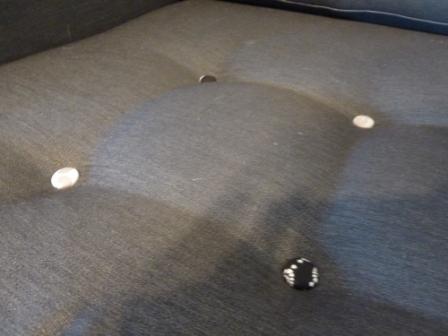
Tufting up close

Step Nine: Admire your hard work and count up all the money you saved.

So the total cost to make one Karlstad sofa is:

  • $499-sofa & slipcover
  • $42-set of Uncle Bob’s replacement legs, including shipping
  • $24.50-8 different fabrics for buttons, including shipping
  • $19.70-button making kit, free shipping
  • $13.80-speciality upholstery needles & twine, including shipping

Grand total: $599

Compare that to Crate and Barrel’s similar Petrie sofa at $1699 or Restoration Hardware’s Churchhill sofa in one of it’s cheaper iterations at $2695!
Authors: Readers Don’t Care About Your Twitter

A couple weeks ago, I wrote a post asking whether fiction writers should blog, and if so, what about. I got some great feedback, and I’ve been doing a lot of thinking and researching in the meantime. A few of you asked that I share my findings, so here are the startling facts.

Keep in mind, I researched my target market. While I’m not a hundred percent who will enjoy my book, I’m guessing it will be older teens and adults, primarily women. They’d likely also read fantasy, young adult, romance, chick lit, thrillers, and maybe some horror or science fiction. If that isn’t your target market, then your statistics might tell you a different story.

I found an excellent research study done by the Romance Writers of America (RWA). While I wouldn’t classify my novel first and foremost as a romance, our target markets would overlap a lot, especially readers of paranormal romance (essentially, romance with a fantasy element).

I strongly recommend reading the whole study, especially if you are a self-publisher. Romance readers are the biggest subgenre purchasers of e-books and care the least about whether they’ve heard of an author or not. The study asked a lot of in depth questions about how to price ebooks, and found that if you price your book too low, readers won’t buy it, because they assume that it’s a low quality book.

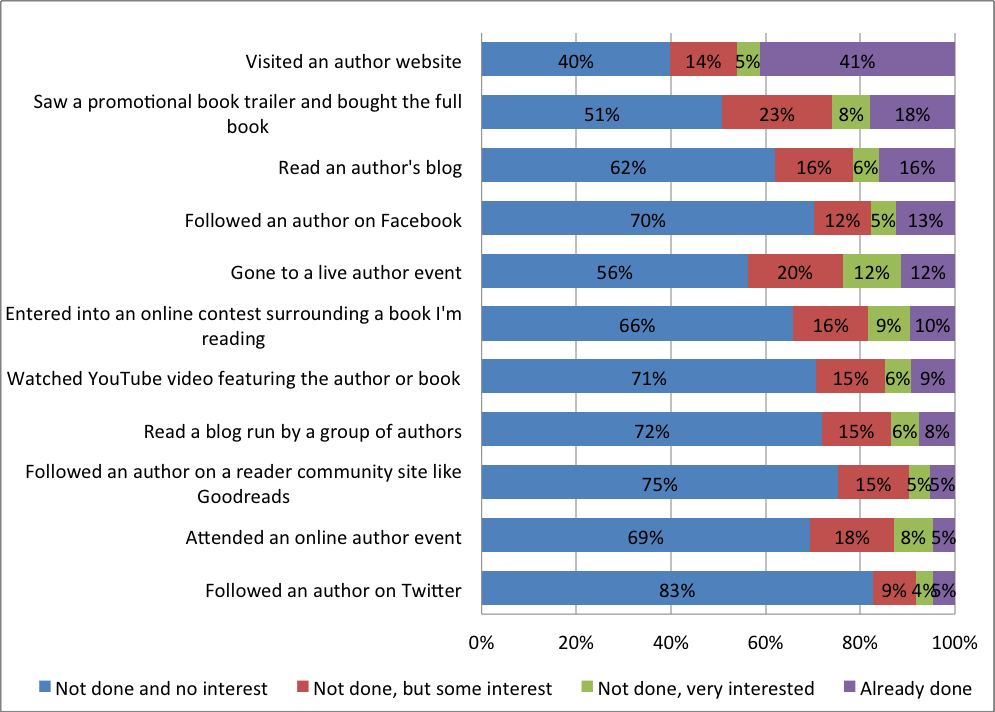
RWA also spent a lot of time on various media and how effective it is at reaching readers. Granted, these statistics were from a 2011 reader survey, so they are a little old, but they are so shocking I wanted to copy them in full for you. Note that blue is NOT DONE AND HAVE NO INTEREST.

Activities that Do or Do Not Interest the Romance Buyer

Source: Romance Writers of America 2011 Romance Book Consumer Survey

Did you see that?

83% of readers have not and have no interest in ever following an author on Twitter. Add to that an additional 13% of readers that don’t follow you and have varying levels of interest of ever checking out your Twitter account. Only 6% of readers have ever actually gone to an author’s Twitter account.

Guess what else they don’t care about? Your Goodreads, YOUR BLOG, your videos and trailers, your Facebook page, or your online or live events. Yes, there are a few people in each of those categories who are interested in those things, but not much.

The one exception here is readers do like author websites. They like to occasionally check in to see what you’re up to, what’s coming out, and any little extra goodies you might be offering. But as for any ongoing info like a blog, Facebook updates, Twitter, etc. –not so much.

After my mind stopped reeling, I thought about this. It makes sense. I only follow two author blogs of my very favorite writers. Honestly, most of the time I give their new posts a quick skim at best, and half the time if it doesn’t have anything to do with their newest book, I delete it immediately. While I have followed a number of authors on Twitter, I don’t ever look at their feeds. I think I might have clicked a Like button or two for an author’s Facebook page, but I’m quite certain I have never read an author’s status update. I’m a writer myself, and I don’t even care about these things. Why in the world would a reader? I am a busy person who is constantly inundated with media. What I really want from my authors is more books, not tweets.

So if all of this media we’ve been pouring our time into isn’t what makes a reader buy a book, then what does influence their purchasing decisions? RWA asked that, too.

  • 50% say they buy the book for the story
  • 19% for the author
  • The third biggest factor is the book is part of a series
  • Lastly is the back cover copy (Does anybody like those front covers?)

An author’s online presence isn’t completely for naught. It does help build name recognition and that hard to measure “buzz.”  The Google spiders learn who you are, and publishers always like that.  The problem is platform building has to eventually lead to hard sales.  RWA found some online influences that did lead to a book purchase:

  • Online bookseller websites (Amazon.com, BN.com, etc.)
  • Reading about it/seeing it online (I wish they’d given a bit more detail about what this means.)
  • Seeing it on a bestseller list
  • Author website

At this point you’re probably thinking, “That’s nice, Lara, but my readers are young and hip and possibly even male. I’m sure this doesn’t apply to me. I don’t write silly paperback romances.”

First of all, whatever you do, don’t ever insult a romance reader. Not only do romances make up a huge part of the publishing market, they are also some of the most loyal repeat buyers. That everyone should have fans like romance readers!

Secondly, are you are sure your readers are who you think they are? The other major study I found was by publishing market statistic guru Bowker. They also will let you download their 28 page report on the state of publishing for free. Want to know who buys the most books, ebooks or traditional?

College educated women over 30 making $50,000 a year or more. Specifically:

  • 60% of books are bought by women
  • 60% of books are bought by people educated to a degree level
  • 58% of books are bought by those making at least $50,000 a year or more
  • 69% of books are bought by those 30 or over, with 28% being 55+

So does any of this make you rethink how you spend your time? It certainly does for me. I’m still pondering what I’m going to do with my blog, but it is likely to go through some changes. The first one is that I’ll just be posting on Mondays. I’m forgoing the Thursday posts so I can have more time to work on my novel. Imagine that!  🙂

My Grandma

Grandma's 90th birthdayI was in Indiana this week to celebrate my grandmother’s 90th birthday.  She is a remarkable woman, and the occasion had me reflecting on just what I had always admired about her.

Grandma has always been so alive, so possessed of a zeal for living.  I believe this comes from a wonderful fearlessness, or at least to someone like me who is given to hand-wringing, what appears to be fearlessness.  Perhaps trying new things scares the dickens out of her, but it has never appeared so to me.

Even as a child, I recognized a boldness in her that I envied.  With great patience she steered me through not one, but three 4-H sewing projects.  I hesitated over every scissor snip and pin placement.  Grandma fed material through the sewing machine at dizzying speeds, and I felt the way she floored the serger was criminal.  Granted, she had decades of sewing experience on me, but I knew there was more to it than that.  She sashayed through her kitchen with the same confidence, showing that rhubarb pie who was in charge.

Years later, I discovered Grandma had painted the delicate china plates that decorated the tip tops of her kitchen cabinets, themselves a daring robin’s egg blue.  I also connected all those hours she spent bent over incomprehensible diagrams on her lap with the many intricate needlepoint wall hangings adorning the house.  Those masterpieces, framed without glass, presented a horrible temptation.  My grubby little hands hovered over the tiny beads and knots, yearning to explore the inviting textures.  A similar treasure taunted me from a hushed corner of the living room.  The china doll with glamorous black hair and a velvet red dress posed in the protection of a curio case.  I left many a nose print on that case trying to study her up close.  What’s that?  Grandma made that, too?  Good heavens, what can’t she do?

My childhood impressions would only be reinforced as an adult.  I heard more stories, which I appreciated more fully with age.  She went away to college and then to the workplace as a physical therapist when it was rare for women to do either.  Would I have been so brave?  I also noticed she hadn’t stopped pursuing her passions as she grew older.  She took up golf, and learned how to use a computer.  Then she downright conquered the technological beast.  She started making greeting cards, printing photos, and using the internet with ease.

I know many older people that are content to rarely try anything new, and I suppose they have earned that.  There is comfort in routine. Even in my thirties I am drawn to familiar rhythms.  Grandma is still trying new recipes, and then emailing them to me already formatted for 3×5 card printing.  She doesn’t sit at home, contemplating years past; she is still out living.  She meets with friends and family, driving and flying when necessary to make that possible.  On an average week, her social calendar is often fuller than mine.

When I am ninety, I pray I am so brave.  No that is wrong.  I am challenged by her way of life already.  I pray I am so brave tomorrow.

Writers: Is Your Blog Working?

I was chatting with a fellow blogger this week, discussing the pros and cons of regular blogging.  We’re both pretty new to the game, and like most newbies are a teensy obsessive about our stats.  Both of us continue to be surprised what posts are popular and which ones seem to tank.

I’m a nerd at heart, so when in doubt, I research.  I wanted to know why fiction authors really blog in the first place.  I’ve always understood platform when it comes to non-fiction writers.  They get to try out all their ideas first on their blog and then collect posts into chapters that eventually become a book.  For those of us that write novels, deciding what to blog about is quite the chore, and it seems most of us end up writing about writing.

But are we accomplishing anything?  What’s the goal of blogging for the fiction writer?  Certainly, there can be more than one.  Some writers blog to develop discipline and to get themselves writing.  Others like being part of the blogging community, making friends and gathering manuscript critiquing partners.

If either of those were my main goals, I’d say my blog is working just fine. Unfortunately, that’s not why I started this blog, and I’m guessing it’s not why most other authors blog, either.  Added discipline and community have been wonderful side benefits, but they have never been the point.  The goal of my blog has always been to build an audience and connect with readers.

While not published yet, I write fantasy fiction for adults.  As mentioned before, I’m pretty attentive to my blog statistics.  The people following my blog are almost exclusively other authors.  That makes sense, since this blog has been about writing and publishing.  While a few of you might one day be interested in a novel of mine, my primary market I will be writing for is not authors.  So why is my blog about the craft of writing–a topic my potential audience won’t likely give a fig about? 

Hmm.  I’m not sure anymore.

I’m not Kristen Lamb, who writes books teaching authors how to use social media and be a support to each other.  I’m not an agent like Rachelle Gardner or a publishing guru like Jane Friedman to be giving writers expert advice how to make it in the industry.  I’m a novelist in want of readers. 

How do I craft a blog that will connect me with the same audience that is likely to read my books?  Is a blog even the best way to do it? 

L.L. Barkat argues that sometimes the best thing an author can do is STOP BLOGGING.  It blew my little mind.  Dan Blank disagrees. I’d really encourage you to read both of those articles including the comment section.

Authors, I’d love a lot of feedback on this.  Should we blog?  Should authors spend their time elsewhere?  If so, where?  If you do think blogging is important, should we really be blogging about writing if our audience is not writers?  What in the world should we blog about instead?

Fall TV Preview: 5 Comedies I Can’t Wait to See

Fox launches its pilots this week, getting the jump on the other networks. If you can’t even wait that long, some of the new shows are available on Hulu. This weekend I gave in to my impatience and watched a few of the new comedies on Hulu including season openers of The Mindy Project, Welcome to the Family, Trophy Wife, and Back in the Game. Mindy was hilarious as usual. If you didn’t watch that show last season, make it a priority this year. I’ll talk more about Trophy Wife in a second, but check out Welcome to the Family. I was pleasantly surprised. It was funny and interesting, and I’ll definitely watch it again. I was a little disappointed in Back in the Game. It has Maggie Lawson, who I have always enjoyed in Psych, and James Caan. Both of them deserve a better vehicle. It wasn’t particularly funny, and some of the child actors were pretty terrible.

But I digress. Looking at this year’s comedy pilots only confirms to me that we are still in the golden age of television. As I read over cast lists, I couldn’t believe some of the people the networks had managed to land for sitcoms this fall. I usually am most excited about the new dramas, but I have a much longer list of comedies I’m anticipating. Here are the top five:

5. Mom: Chuck Lorre has done a number of comedies for CBS—some I have liked better than others. I’m still a dedicated Big Bang Theory fan. Mom is Lorre’s latest, starring Anna Ferris and Allison Janney, both of whom I pretty consistently find amusing. The cast also includes French Stewart (3rd Rock from the Sun) and Nate Cordrry (former Daily Show correspondent).   Ferris plays a single mom and recovering alcoholic. CBS is advertising it as a dark comedy, and I’m a sucker for a well done dark comedy. Premieres Mon. Sept. 23 @ 9:30 EDT on CBS.

4. The Crazy Ones: I was super excited two years ago when Sarah Michelle Geller returned to TV. What Buffy fan wasn’t? Ringer had an interesting premise and an excellent cast. Something about it just never worked, though, and the CW canceled it after one season. I was pleased to see she had found a new show so quickly. The Crazy Ones is a workplace comedy about an advertising agency with a mostly unknown cast. The exception is Robin Williams, who plays SMG’s dad. I don’t think Williams has been on TV since his Mork and Mindy days. Let’s hope this one is really good, because I bet it’s costing CBS a fortune. If it’s just okay at first, it will probably get cut for budget reasons before it can find its footing. Premieres Thur. Sept. 26 @ 9:00 EDT on CBS.

3. Trophy Wife: I was already looking forward to this pilot, but now that I’ve seen it, I know for sure that I like it. It was amusing and well done. Even the child actors were good, who are often overly cute or just plain dreadful. I have no idea how ABC landed Academy Award winning actress Marcia Gay Harden, but she’s phenomenal as always. I’ve grown to like Malin Ackermen from her guest role on Suburgatory, but honestly I’d watch anything with Bradley Whitford in it. I’ve loved him since West Wing, watched all of Studio 60, and laughed so hard I cried at his terrible shirts and even worse mustache in The Good Guys. I didn’t know he could do comedy until Good Guys, and he’s incredible. I’m glad to see he’s returning to that genre. Premieres Tues. Sept. 24 @ 9:30 EDT on ABC. Available now on Hulu.

2. Super Fun Night: Two words—Rebel Wilson. My husband and I lived in Australia for a while, where we got to see Wilson in a number of things right before she became popular in America for Bridesmaids. For those out there who might have thought she was just funny the one time, Wilson quickly proved them wrong in What to Expect When You’re Expecting and Pitch Perfect. I am thrilled at the prospect of getting to see her on a weekly basis in Super Fun Night. I’m even willing to forgive that it is stealing Suburgatory’s time slot for a little bit. As someone that is way too nerdy and socially awkward to ever attempt to go clubbing, I empathize hugely with the main storyline, too. For an added bonus, Conan O’Brien is producing. I don’t know what he’s bringing to the party, but I’m sure I’ll love it. Premieres Wed. Oct. 2 @ 9:30 EDT on ABC.

1. The Michael J. Fox Show: I do love MJF, and I’m glad to see him back on a regular show, but this is in no way a sentimental vote. If you don’t watch any of the other trailers I linked to on this post, please at least click this one. I’m dying to see this show because it looks freakin’ hysterical. I watched the trailer three times, and pestered multiple people to watch this as well. For a few days, whoever came over to our house had to sit down on the couch and let me bring up You Tube. The jokes stayed with me in that wonderful way so that even a few months later, I can quote them to you. The only other shows I can do that with are Modern Family and How I Met Your Mother. I feel like this show has the potential to be just as fun as those two classics. Premieres Thur. Sept. 26 @ 9:30 EDT on NBC.

Other comedies I intend to try and report back on:

CBS: We Are Men (another packed cast with Tony Shalhoub, Jerry O’Connell, and Kal Penn) and The Millers (starring Will Arnett and done by Greg Garcia of My Name is Earl fame)

Fox: Dads (on the pro side this stars Seth Green and Giovanni Ribisi, but on the con side it is done by Seth McFarlane, who I usually find obnoxious) and Brooklyn Nine-Nine (cop show with Andy Samberg).

ABC: Back in the Game (pilot was so-so, but I’ll give it a couple more before I decide)

NBC: Welcome to the Family (mentioned already this was good), Sean Saves the World (Sean Hayes heads a good cast, but the concept doesn’t look super interesting)

Fall TV Preview: 5 Dramas I Can’t Wait to See

Okay, I waited as long as possible. People, can we talk about the new pilots? Great. What? You said, “No?”  Too bad. I warned you multiple times that this was the blog of a TV addict.   I’ll have you know I have shown great restraint. I’ve had my fall TV spreadsheet made for a good month at least, and I am only just now submitting you to a series of posts about the new pilots. Yes, you read that correctly. Series. Disney villain laugh. Disney villain laugh.

For the sake of timeliness, I’m going to ignore any new show that I already know is not coming on until midseason. There seem to be a great number of these. Much to my consternation, some of the most promising pilots aren’t debuting until after January. Still, there is plenty to talk about now.

5. Dracula: NBC has a surprising amount of shows that look promising this season. They’ll need them. Parks and Rec is always wonderful, and they got a pretty solid hit out of Revolution last year, but once again the Peacock is nearly starting from scratch. Dracula isn’t arriving at the best time. Most of the public is suffering from vampire fatigue. However, I’m not one of them, and this show has two other strong pluses. Jonathan Rhys Myers is playing the title role, and he’s got a Downton Abbey producer at the helm. I imagine the NBC pilot most people are exited about is The Blacklist. I intend to watch it, too, but I’m never going to be as excited about James Spader smirking as Jonathan Rhys Myers in period costume. Premieres Fri. Oct. 25 @ 10:00 p.m. EDT on NBC

4. Sleepy Hollow: The trailers for this look semi-amusing, but they aren’t really what have me excited about this time-travel/crime drama mash-up from Fox. What sent me into a fangirl frenzy were the names Kurtzman and Orci. For those unfamiliar with Alex and Roberto (I like to think of us being on a first name basis), they are the amazing writing team that brought us the last two Star Trek movies and Fringe. Sniff, sniff. Sorry, I need a minute. I almost asked for a moment of silence in our household when I had to delete Fringe from last year’s spreadsheet. If the power duo are back writing and producing Sleep Hollow, I’m going to expect great things; I don’t care how convoluted the premise sounds. Also, they have Len Wiseman of the Underworld movies directing. When I read that, I almost got giddy. I don’t really know any of the actors in this apart from Orlando Jones, but I have always found him funny. Premieres Mon. Sept. 16 @ 9:00 p.m. EDT on FOX

3. Almost Human: This Fox pilot edges out Sleepy Hollow for me because the trailer is just so much more compelling. The premise of a cop in the future with an android partner is interesting. It’s also one of the pilots that has critics practically foaming at the mouth. I’m admittedly jealous every time I read an article about how amazing the pilot is when I know I have to wait until November. I do like Karl Urban, who plays the main character, but once again, it’s the people behind the show that have me excited. J.J. Abrams is producing, which after Alias, Fringe, and Lost used be enough to get me to watch anything with the man’s name attached. But then I saw Undercovers, Alcatraz, and Person of Interest. I’ve become a bit more discriminating in my Abrams’s TV series since. Now I check who else he’s doing the series with, knowing that Abrams is likely lending some money, but not much time. He does have a Star Wars franchise to produce, after all. The good news here is that the name partnered with Abrams for Almost Human is J.H. Wyman of Fringe fame, so I know I’m in good hands. Premieres Mon. Nov. 4 @ 8:00 p.m. EDT on FOX

2. Marvel’s Agents of S.H.I.E.L.D. : I’m not sure I even need to talk about this, because I’m not sure there’s a person on the planet who doesn’t already have their DVR programmed. Agent Colson is alive and solving cases with a team of young whipper snappers. I’m sure the guest stars will be epic. All of that would be enough, but I’ve got two more words for you: Joss Whedon. Premieres Tues. Sept. 24 @ 8:00 p.m. EDT on ABC

1. The Originals: Did I just lose all of my credibility with my number one pick? Sorry, I’ve got to be honest. The Vampire Dairies has been the show I have to watch the day it comes on for the last two years. One of the reasons TVD is so good is the amazing villain they’ve had in Klaus. Creator Julie Plec and actor Joseph Morgan have done a wonderful job creating a rich character whom I despised at first and now adore. The CW wanted to give The Originals their own spin off a year ago, but Plec asked for time to transform Klaus from villain to at least the beginnings of a hero. I am eager to see where they will go with the character now that Klaus is the lead of his own show. My only fear is that by giving the Originals their own series, the end result could be two great shows, or it could mean they gutted my favorite hour of television and replaced it with two mediocre shows instead. The Originals also gets bonus points because I’ve got my fingers crossed that Price Peterson will write the recaps of the show for TV.com. There’s no way he won’t watch it, so he might as well make some money while he does. Premieres Thurs. Oct. 3 @ 9:00 p.m. EDT on the CW before moving to Tues. @ 8:00 p.m.

I’ll report back on these to let other TV junkies know if the pilots lived up to my expectations. Other drama pilots I intend to give a try:

  • The Blacklist: Premieres Mon. Sept. 23 @ 10 p.m. EDT on NBC
  • The Tomorrow People: Premieres Wed. Oct. 9 @ 9 p.m. EDT on the CW
  • Reign: Premieres Thurs. Oct. 17 @ 9 p.m. EDT on the CW

What new shows are you looking forward to?

After My Theories, Here’s Some Cool Infographic Fact

So after a number of posts about why readers will ditch a book, and how to make sure you write characters so they don’t, I found this infographic and laughed.  I read a ton of blogs, but I have a tendency to let them pile up for weeks and then read 200+ posts for hours on a random Saturday.  If I hadn’t been so behind on Nathan Bransford’s blog, I would have found this a lot earlier and had some cold hard facts in hand.  The lovely people at Goodreads surveyed their members and have provided us with The Psychology of Abandonment.

My fellow authors, we have caught a break.  It turns out 38.1% of the population will read our book to the bitter end NO MATTER WHAT.  I also noted that only 4.9% of people reported that they stopped reading because they didn’t like the main character as opposed to 46.4% that claimed it was because the book was slow, boring.  I would still argue that not caring about the characters (which is different from not liking them) makes a book very boring, but I wonder if the complaint there was more about pacing.  I found the results fascinating, especially that people abandon Catch-22.  Okay, it’s a little hard to follow at first, but that’s a good book.  What surprised you?

goodreads infographic

How To Get Readers To Feel Something For Your Characters-Part II

So we’ve established that if readers don’t care about your characters, they are much more likely to ditch your book. On Monday, we talked about common author errors that lead to character apathy.

It’s not enough to just avoid the obvious pitfalls, though. When I finish a book with characters I really love, it’s almost like a death. I’m in mourning for a few days, and I’m known to be a little crabby. Those are the authors whose books I pre-order. When that next book hits my door, I crawl back into the world of my beloved friends. I pity the person that interrupts me. I aspire to write books that readers feel that strongly about.

Granted, there’s no formula for writing perfect characters. I have found starting with the following questions certainly increases your chances of writing deeper characters whom your readers will enjoy. How do you know if your manuscript needs more work on characterization? That’s simple. Every manuscript needs deeper characterization. Career editor Elizabeth Lyon maintains that this is a nearly universal phenomenon in the manuscripts she sees.

Batman Backstory

So, this particular backstory can get old, but that doesn’t mean your characters won’t have past experiences that shape them.

What experiences have shaped your character? Rare is the person who has made it to adulthood (or even the teenage years for those writing young adult) unscathed. Most of us carry around past experiences for good or for ill that shape not only our worldviews, but the actions we take. Well developed characters are no different. This doesn’t have to be clichéd. Not all heroes have to be orphans on quests to bring justice to the villains who killed their parents before their very eyes! Your heroine could just as easily be formed by her experience as a military brat who grew up on bases in other countries. Not really American, not really of the other cultures, either, this “third-culture” kid is restless and has trouble committing to long-term relationships. Whatever the backstory is, you need to know it, and every character needs one. Good novels generally show character growth. A great way to do that is to show a character overcoming the wounds of the past.

What drives each character? I’m not talking about the story goal here, whatever that might be. Don’t confuse this with getting the girl, defeating the villain, etc. These are usually universal needs that everyone can identify with. This is the personal yearning that is more important to the character than anything else. Is it a desire to be loved? Do they want to succeed and finally make a disapproving parent proud? Do they need to feel needed and useful? If you don’t know what they want most of all, how will you make decisions for the character?

Baby eats puppy.

See? Even cute, loveable characters can have bad habits. It makes them more complex.

Did you give them strengths? Weaknesses? No one is all good or all bad. Your heroes need flaws and your villains need redeeming qualities.  Not only does it make your characters more interesting, it also provides you with good sources of internal story conflict. A hero’s weakness can keep him stuck in the mistakes and experiences of the past where he’ll never get what he’s yearning for. His strengths will pull him toward character growth. Don’t go crazy with a grocery list of both, though. Pick one or two of each to emphasize, or you can just end up with a mess.

What does your character need to learn (often the theme)? In order for your character to get what she yearns for most, what does she have to learn first? For example, just because a desire to make a disapproving parent proud drives your character’s actions, she doesn’t have to get that approval in the end. In fact, she might need to learn that her disapproving parent will never be pleased. The story theme might be about her finally accepting that. In the end, the way her yearning is fulfilled is quitting the career that her parents approved of but she hated. She must now find her self-worth outside of parental approval.

Child's drawing

If you gave a description of your character to a sketch artist, would it look something like this?

Can you picture them? I’m not talking a semi-vague blob here where you’ve just nailed down the basics of hair and eye color, height and weight. You need a crystal clear, very detailed portrait of each character. In Manuscript Makeover, Elizabeth Lyons lists the following physical characteristics that you should know: gender, age, height, weight, body build, body hair, race, skin color, skin texture, hair body and style, hair texture and color, smell of hair, head size and shape, facial hair, eye shape and color, shape of brow, shape and fullness of lips, teeth size and color, personal grooming, handshake, hands, nails, body smell, added scents, carriage and posture, activity level (lethargic to maniac, focused to attention deficit), deformities, hereditary physical attributes, birthmarks, scars, tattoos, overall health, habitual stances, gestures, and mannerisms, voice quality—volume and timbre and pitch (soprano, alto, tenor, baritone, bass), quality of laugh, head-to-toe clothing (style, functionality, quality), and accessories (jewelry, bags, satchels, gloves, scarves, hats). Whew!

Rhyan Scorpio-Rhys over at Mired in Mundanity did a post back in May that provides authors with a list of 101 excellent questions to ask when developing characters. The final one is one of the best questions ever. “Why should I give a tinker’s damn about your character? Don’t get offended, it’s a valid question. What makes your character interesting? Am I supposed to like them, or hate them? Why?”  I’ve found it to be one of the most difficult questions to answer. I want to turn all middle-schooler and shout, “Just because, okay!”  Forcing yourself to answer it will go a long way in focusing your characterization efforts.

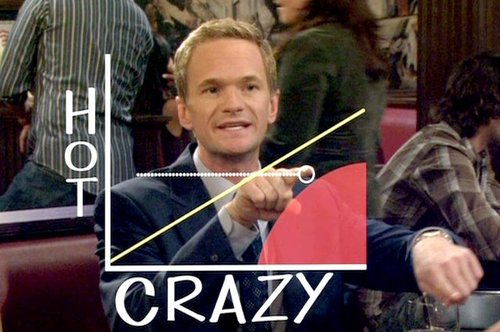
Barney's Hot/Crazy graph

Eccentric/sleazy. . .it’s a fine line. Always entertaining, though.

Are they eccentric enough?  This one comes from Sol Stein. I was skeptical of this advice at first, but after I was made aware of it and started studying good characters, I realized he was right. Stein maintains no one really wants to read about an average Joe. Readers have enough ordinariness in real life, so they long for something unusual in their fiction. Any How I Met Your Mother fan knows Barney’s character wouldn’t be as legen-wait for it-dary without his catch-phrases, suits, apartment purposely designed to discourage women from staying long, crazy vs. hot charts, elaborate playbook for picking up women, etc. You might not be friends with Barney in real life, but he’d be fascinating to read about.

Related Reading:

Mired in Mundanity’s whole list of 101 Questions for Characters

The Universal Mary Sue Litmus Test (A test to see how clichéd you’ve made your character.)

How To Get Readers to Feel Something For Your Characters-Part I

Last week I talked about the quickest way to get even loyal readers to ditch your book. If they aren’t emotionally invested in the characters of your story, they’ll bail on your lovingly crafted novel in a hurry. Right now you might be thinking, “All right, Ms. Smartypants, that’s all well and good, but how do I get my readers emotionally invested? I’m emotionally invested in my protagonist up to my eyeballs. Give me some for examples here.”

That’s a legitimate question. I went back and analyzed those six books that I bailed on recently and tried to pinpoint exactly how the authors lost me. Why didn’t I care about the characters? In this first post on how to write characters that won’t put your readers to sleep, I’ll focus on some of the pitfalls to avoid. All of six of the books committed at least one of these, usually more than one.

No emotional reaction

Characters lack emotional reactions. This is especially crippling for a novel if your protagonist is the one with the problem. Don’t get me wrong, I love a great stoic character. Stoic does not equal no emotion, though. The reason stoic characters work is because even though they aren’t crying as the love of their lives die in their arms, you know they are feeling powerful emotions and struggling to keep them in. As an author you’ve got to show us that struggle. If it’s a point of view character, for heaven’s sake, take us inside his head and let us know what he’s thinking. If he’s not a POV character, we need the actions that betray what he’s feeling—the trembling lips, the fisted hands, the clenched jaws. We also need that character’s actions and motivations to convey what he is feeling. The heroine might never speak of her burning need for revenge, but we can watch her hunt down the killer.

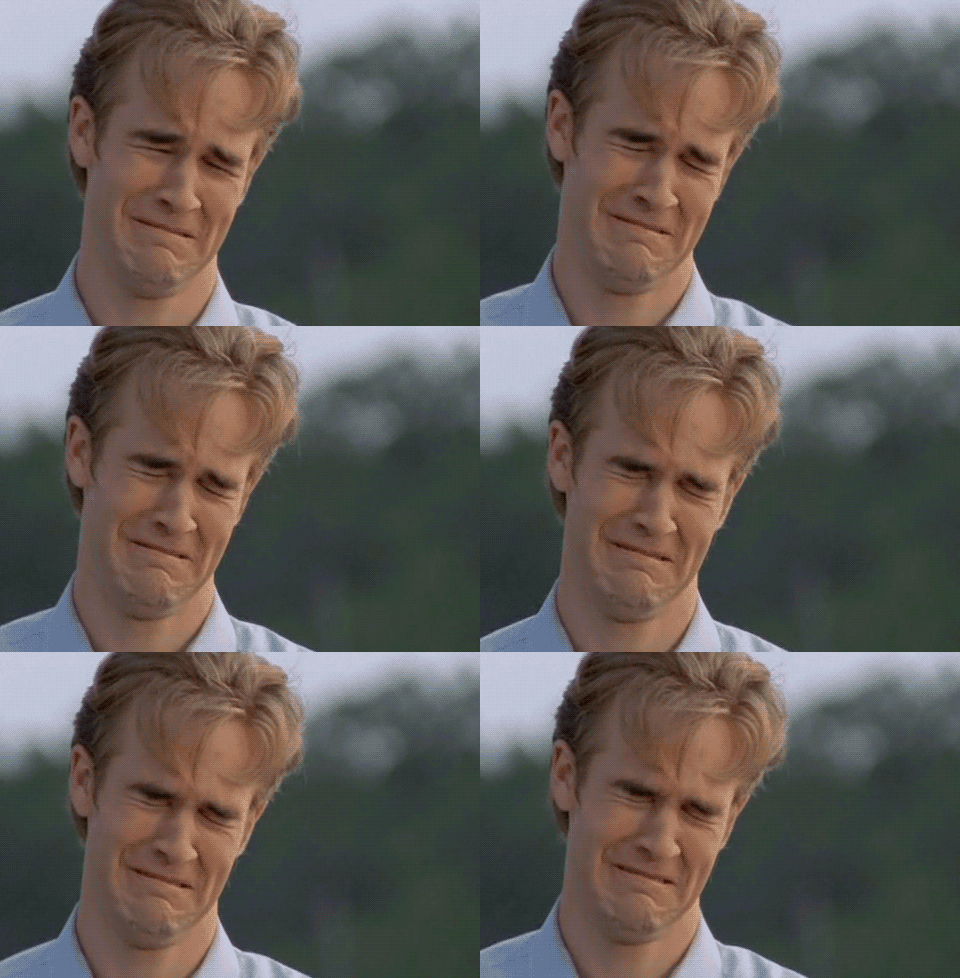
Dawson the Crybaby

There’s a reason I bailed on Dawson’s Creek, too.

Characters have only one emotional reaction. Yes, even in real life, people have a default reaction in stressful situations. Some are yellers, others are criers, and some people run away. A good character can absolutely have an M.O. What they can’t have is only one reaction over and over. I think everyone’s read a book where the character’s chest beat so much they should have died of a heart attack after chapter three. One of the books I gave up on had a female character that could do nothing but cry. Happy, sad, depressed, sacred, angry, Tuesday evening—you name it—she cried. A personal pet peeve of mine is the throwing of stuff off of desks and tables repeatedly to show a person is angry. Sometimes the author will shake things up and (gasp!) have the character also punch a wall or door. Buy an Emotion Thesaurus and give me some variety, please.

Low stakes for characters

I have to mention here that this picture is from an actual competition in the UK where people watch paint dry.

The stakes are too low. An author’s characters are her babies, so I understand the desire to not be mean to them. However, playing it safe does not make for good story-telling. Neither does it help your readers build an attachment to your babies. Writers need to be relentlessly awful to their characters. Readers bond with characters as they suffer. One of the books I ditched had dual protagonists. Other than the inciting incidents for each that set up the book, nothing upsetting happened to either of them for about 200 pages. I kid you not, I read chapter after chapter, and the only thing of significance that happened to either of them was they managed to get jobs. They weren’t even interesting jobs, nor was there any conflict in obtaining the employment. The two protagonists didn’t even meet until page 176. You know who else I hadn’t met after 200 pages? The antagonist. Or if I did, he was so mildly antagonizing I missed his entrance.

Whiny heroes are like toddlers

Whiny, selfish heroes. I just finished up a series of posts on the mythic hero. Traditional heroes generally aren’t allowed to be either of the adjectives I just listed, with good reason. It doesn’t endear him or her to your readers. I would suggest they’re not a good look on an antihero, either. Most of us can get behind a rough around the edges antihero who breaks the rules so long as the ends justify the means. No one likes a whiner, though. It reduces your hero or heroine to a petulant toddler. If your whole cast of characters is this self-centered, you’re essentially asking your reader to baby-sit.

Michael Bay Presents Explosions

No motivation/unclear motivation/unbelievable motivation. Why did your heroine just blow up that building? “Because it was cool,” is only a motivation if you’re Michael Bay. As an author, you need to know why your characters take the actions they do and say the things they say. What drives your hero? What is your heroine’s deepest yearning? What wound haunts your villain to make her so awful? If you don’t know, your reader sure won’t. If the plot isn’t driven by clear and believable motivation, how can the audience get lost in the world you are creating? It can’t. Readers won’t buy what you’re selling if they have to stop and start the reading process too often to try to puzzle things out.

Related Reading:

In lieu of a real post, I bring you kitties.

So you might have noticed I did not get up my normal Thursday post. I have been a bit under the weather. Even so, I’ve been trying to plug away at a post.

This morning, my husband found this awesome site called Meowbify. It cat-a-fies your website.  I decided this was way better than anything I could come up with in my current state, but maybe that’s the migraine talking.

So, for your enjoyment, click the link below if you’d like to see my blog with the improvement of a lot of kitties:

http://cat.laraschase.com.meowbify.com/

On Monday, I will be back with real posts.