Distinct Dialogue: How to Make Each of Your Characters Sound Unique

Last week I wrote a post on how Benedict Cumberbatch is able to convey a lot of depth to the characters he plays just by using his voice and speech patterns. Sadly, BC doesn’t come to my house a couple times a week and read my most recently written pages aloud for me, making even the dullest scenes sound amazing. If he did, I wouldn’t be spending so much time rewriting dialogue.

Authors should be reading their manuscripts aloud, especially the dialogue. Certain mistakes and clunky sentences that slipped past me even while reading a printout give me a verbal slap when I hear them out loud. If you can get someone else to read your pages to you, that’s even better.

So you’ve realized maybe your dialogue could use a bit of help. If you’re like me, the biggest problem is that all your characters speak pretty much the same way. So how do you get their individual personalities to pop off the page? Here’s some tips for making each of your characters distinct:

High and Low Diction:  I have one character that is the definition of otherworldly. She lives in a lofty spirit realm, completely out of touch with humans.  On my first pass at her dialogue, something about it wasn’t right. The problem finally dawned on me—diction. I got rid of the contractions and substituted words like “weep” instead of “cry.”    She’s the only person in the book who’s contraction-free and using phrases like, “I cannot linger here.”

Age appropriate:  I have more than one character that is immortal, so they’ve been alive a long time, even though they look young. Certainly, they had to learn to adapt to new slang and ways of talking to blend in, but a great way to distinguish these characters from my younger ones would be letting them slip up and use an out of date phrase. Likewise, they could be unable to adopt certain new ones. If I think about talking with my Grandpa, he is never going to use the words, “yeah, like, or cool” in the same way someone my age will.

Ethnicity and country of origin: I missed an opportunity here. Several of my characters are Russian immigrants, but they never slip up and say “da” instead of yes or mess up their English words. For example, they could say “Oofos” instead of UFOs, not knowing that it’s an acronym where you say each letter instead of a word they are trying to pronounce as a whole. I did think to occasionally sprinkle in a word or phrase in Russian, but these are used almost exclusively by those characters that Russian is their second language, not their first. So I inadvertently have my American-born Russians sounding more Russian than their ESL parents.

Vocation:  You would never know what my characters did for a living by how they speak. Job metaphors are a great way to distinguish your characters. I have a medic, a CNA, and a nurse. Do you think any of them make any medical comments? Nope. Not even anything as obvious as “code blue” when they are in a really sticky situation. Likewise, I have a dancer that could be “counting the beats” in a tense scene.

Education and Social Class: Some of this might come out in diction, vocation, or origin, but depending on how complicated your character, you could have an interesting mix. For example, I have a character whose parents were immigrants. An immigrant background might make readers think she had a modest upbringing, but in fact, her parents were talented artists, and her father was a professor at a prestigious university. Then her father died, and her family slowly descended to lower middle class, and finally she was on her own supporting her sister as a teenager. When my novel opens, she could qualify for food stamps, only has a high school education, and is living in an unsafe neighborhood. Still, she had educated parents, is very smart, and reads a lot. How would this character speak? Her neighbors who have always lived a lower class life do not speak Standard English, but I have her speaking it. Her younger sister might pick up more of the slang of the neighborhood since she was much younger when the family enjoyed the privilege of academia. Remember, you want to use just enough slang and accent to suggest a different way of speaking but not enough to irritate your reader.

Phrase length:  I like to compare and contrast two of the men in my novel frequently. I have descriptions of one being very quiet and speaking in “short, terse sentences bitten off at the end,” and the other “a schmoozer who loves the sound of his own voice.” Even if I overlook the obvious problem that I told my readers their speaking patterns instead of showing them, I also didn’t follow my own generalization. My so-called quiet character is given to mini-lectures, and the loquacious one ended up being surprisingly economical with his words. Again, this might be okay because it at least means they have speech patterns that distinguish them from one another, but they don’t fit their characterization.

Misdirection and manipulation:  I had a little bit of this in my dialogue on my first draft, but not enough, and certain characters needed a lot more of it. If you have a really awful villain who lies, why would they be straightforward in their dialogue? How often do you have a conversation with a friend where you go home and try to puzzle out what was truly said? How frequently do you commit to something you had no intention of doing at the beginning of a conversation with a coworker? I have some very multi-layered complicated characters speaking only in very straightforward dialogue. Not only is it not true to their characters, but I’m missing out on a wonderful opportunity for subtext and increased conflict.

Pet phrases:  Each character in your story should have a list of phrases they repeat. If you need inspiration, just pay attention to your friends for a week and take notes. I have one friend that always says, “In a way,” before he gives an example of something. Another grad student friend who reads a lot of academic texts is always using words I’d swear he made up, like “relationality.”  Spell check doesn’t think that’s a word, either. If you need an example from TV, think how Shawn and Gus from Psych have used “Suck it!” to such great effect for eight years.

A Lesson in Dialogue from Benedict Cumberbatch

STAR TREK INTO DARKNESS

Left to right, Zachary Quinto as Spock, Benedict Cumberbatch as John Harrison, and Chris Pine as Kirk in Star Trek: Into Darkness

Benedict Cumberbatch (BC) is a magnificent actor—hardly a newsflash to anyone who has seen BBC’s series Sherlock. He’s been nominated for more than one Emmy and I’m sure an equal amount of awards in Britain. I enjoyed the first Star Trek, but I admit I was even more excited for the sequel when I heard BC was cast as the movie’s villain.

I saw Into Darkness opening night and was not disappointed by BC’s performance. He was so compelling that there were times I was secretly rooting for him, and I’m a fan of Pine’s Kirk and Quinto’s Spock.

As the weeks passed, I wondered why I found BC’s villain so gripping. Last week a friend who had been overseas when Star Trek was released returned home. She was searching for someone to go see it with her. I quickly volunteered to see it again, driven by my desire to study BC’s character.

Since I knew how the story turned out, I was more detached this time. From the first scene with BC, I scrutinized his movements, speech, and facial expressions. Was it just because I had grown fond of his Sherlock character? I didn’t think so, as his Star Trek character was markedly different.

As BC paced in his containment cell, lecturing Kirk, I realized even more than his costume, facial expressions, or movements, Cumberbatch’s character was conveyed with his speech. While I’m certain some of the credit here belongs to the screenwriter(s), BC’s delivery was critically important. Thinking back to episodes of Sherlock, which are written by a different person, I remembered that BC does the same thing with Sherlock, although in a way appropriate to that character.

I’m not talking about his British accent here. I’m talking about how he lorded over Kirk without touching him. He did this with his word choice, intelligent reasoning, short clipped commands followed by longer explanations spoken with a condescension that belittled Kirk. BC barely moved his hands or body throughout this, and his face was nearly frozen as well. His diction and cadence alone expressed that he was a dangerous man of great intelligence and brutality.

I have read a number of writing guides that state your characters should each have a distinct way of talking, so that even if you took away the speaker attributions, you should know which character is speaking. I had a hard time understanding this advice. How was that accomplished exactly? As I watched BC on the screen, I understood.

So how do you make your characters spring to life as if Benedict Cumberbatch had lent his magic to enliven their dialogue? On Monday, I’ll walk through some examples of how to make each of your characters’ dialogue distinct.

The Book That Ruined My Life

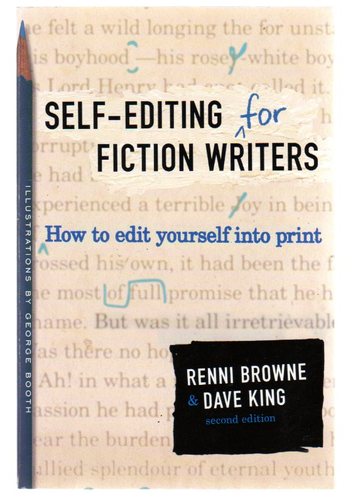
Self-editing for Fiction Writers by Browne & King

The post title might be a teensy bit melodramatic, but I wish it were more for effect than it is. I’ll try to briefly explain. If you have written a book and not yet been published, or you self published, please stick with me. Learn from my pain, I beg of you.

What Happened

I finished the first draft of my novel at the end of last September. I sent it to my first round of beta readers and immediately started on book two. The book two draft was done in January, and I’m almost done with three. All of these novels are in the hands of at least one beta reader, and the first one has now been read by about ten people.

With each new reader, I’ve received helpful feedback, which I’ve implemented. I also hired a friend who was an English major to help me whip my grammar into shape. I read Yagoda’s and Strunk and White’s style manuals and spent weeks hunting down adverbs and killing them.

I really felt like the manuscript for the first novel, at least, was in good shape. I wrote an agent query letter that I felt confident about and thought in a week or two I would have the novel polished enough to send it.

This week at the library, I was perusing the 808 section to see if there were any other writing books I might like to read. Since I’m revising, I went ahead and checked out Self-Editing for Fiction Writers. I thought there might be a couple of things I might have missed, which I could fix quickly before I sent out my manuscript at the end of July.

I read it in less than 24 hours, and then I really wanted to go have a good cry. The book had driven home a very humbling fact:  for all the efforts of the previous months, my writing was still amateurish. I realized my manuscript was nowhere close to being ready to send out. I needed to do extensive rewrites–like line-by-line, might be just as easy to start with a fresh Word document, kind of rewriting.

The Problem

My novel has multiple problems, but that’s not the problem. I’ve read extensively about new authors and the common mistakes they make. One that I’ve heard repeatedly is that new authors often think they are the exception.

Exception to what? You name it:  rejection, the time and effort it takes to be successful, that their first drafts are crap, etc. I read this numerous times and thought, “Well, that’s dumb. Why would anyone think that way?”  Even while I was thinking this to myself, another part of me was thinking, “But my first draft is pretty good. I have some stuff to fix, but my betas like it.”

Wrong. My first draft was crap. Did it have a lot of potential? Yes. Did it have the makings of a great story with interesting characters? Yes. Was it still crap? Absolutely. Was I an exception? Nope.

I needed to assume that I was like every other newbie author and  that I was going to make every newbie author mistake. If I think I know what I’m doing, I probably don’t. However, if I assume I’m an idiot and research everything, I might get this right.

My Secondary Problem

After my biggest problem dawned on me, I realized I had a second one that had contributed to the first. Who was I getting my information from? When making decisions on how to edit, whose advice had I taken?

My readers’, which is fine–I needed that. Then I had consulted other writers, both those just starting out and the books of those who had been in the game a long time. Again, this probably didn’t hurt.

Plus, I had my English major friend, right? She was great for grammar, but she had never edited fiction before, only academic work, and that’s a whole different ballgame.

So whose expertise hadn’t I consulted about editing fiction? A fiction editor. Sure, I’d read On Writing. Who hasn’t heard of Stephen King? Have you heard of Browne & King? No. Well, let me tell you about them.

Renni Browne and Dave King are both professional editors of fiction whose combined years in editing exceed my age. They wrote a book that chapter by chapter, page by page ruined me. They opened my eyes to the problem, but they also told me how to fix it.

I hope one day I can meet them. No, not to punch them, no matter tempting that was a couple days ago. I want to thank them for challenging me to be a better writer.

Buy the book. Read it. Cry. Revise.

More Goodies in Resources for Writers

As promised, I have added my website page in the Resources for Writers section.  There are some especially good resources for finding agents if you’re in the market for one.

Also, I added another title to the books page and four more blogs.

I hope to get the articles page up in the next week.

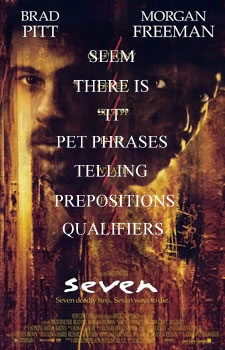
My Seven Deadly Stylistic Sins

Seven Stylistic Sins

When I first started writing fiction, I didn’t understand why authors often only publish a book a year, two if they’re prolific. Several of my favorite authors publish even more infrequently than that, much to my chagrin. I can write a first draft in three months easily. What takes so long?

I started revisions. Now I understand.

Editing is taking FOR-EVE-R. Okay, it’s been six weeks, but it feels like an eternity. Part of the problem is that I have made a lot of common newbie errors that aren’t just in a scene or two, they’re pervasive. In hopes that I might save others from my revision torture, I thought I’d list the top seven mistakes that have sucked up the most time.

  1.  Seem/Appear/Suppose/Guess. I seem to appear very wishy-washy when writing. I guess my characters should just do things instead of seeming to do things, I suppose. Yuck!
  2. There is/There are. Starting a sentence with these words isn’t grammatically wrong, but it isn’t precise or interesting, either.
  3. “It” as subject. You can use “it” as the subject and be perfectly fine, but often when I do, my “it” is very vague. For example, I had a few different variations of this sentence:  “It was getting dark.”  Twice I meant the sun was setting, once I was referring to the lighting in a room, and another time a character was blacking out. My “it” was so vague as to make the situation unclear.
  4. Pet phrases. I know I’m not supposed to use clichés, but there were certain phrases I used often enough that they got just as annoying. I didn’t notice them while writing, but when rereading my chapters over and over, they began to make themselves known. I think I used the phrase, “for a moment” at least once a chapter. I’ve started keeping a list of my pet phrases, so I can do a search for them.
  5. Telling with dialogue. My problem wasn’t so much with the dialogue itself as the mess I caused around it. For example, I knew I wasn’t supposed to write:  “Surrender or I’ll shoot!” the hero said menacingly. Menacingly is an adverb, and those are no-no’s. Instead, I’d write something like:  “Surrender or I’ll shoot!” the hero yelled. He shot the villain a look that was menacing. The second attempt is not any better than the first. I’m still telling you the hero is menacing without showing you the menace. As I’m editing, I have to change the line to read more like this:  “Surrender or I’ll shoot!”  The hero leveled the revolver to the villain’s chest and cocked the hammer.
  6. Preposition party. Prepositions are like rabbits for me. If I put two together in a sentence, before I know it, I’ve got three or four. I had one sentence with six. To say that things got ambiguous and hard to follow was an understatement. I’m trying to limit myself to two a sentence.
  7. Qualifiers, intensifiers, and other words that don’t add much. I had to spend four hours just on “just.”  Put this list of words into your Find command and squash them dead. Most of the time a simple delete was all that was needed, no sentence reworking necessary. Pretty, somewhat, a little, kind of, kinda, sort of, rather, arguably, slightly, very, extremely, really, completely, totally, absolutely, unbelievably, remarkably, literally (you probably used this one wrong anyway), particular, personally, frankly, to tell the truth, I’m not going to lie, actually, just, only, simply

What else should I be looking for?  Is there something you do repeatedly?  As much as I hate to drag out the revision process, I also want to do it right.  What’s your best editing advice?

New blog section: Resources for Writers

I finally got around to putting up the resource section I’ve been promising.  You’ll see I have three categories in my header now:  Blog, Bio, and Resources for Writers.

The Resources section will cover books, articles, websites, and blogs that I have found helpful as a writer.  The books and blogs pages are up and running with a few items listed.  The articles and websites pages I hope to have up by the end of the week.  I’ll be continually adding to these lists.

If you have a resource that’s been invaluable to you that you think should be included, let me know.

The Writer Doubt Epidemic: Why it hits us all, and how to strike back

As I’m in the middle of intensive edits, Victoria’s post couldn’t have come at a better time. It’s worth a read for any of you, like me, that have ever felt you’re writing meaningless drivel. Lie down and let the feeling pass. Then get up and start writing again.

Victoria Grefer's avatarCreative Writing with the Crimson League

1159639_doubtI have been doubting myself as a writer lately. A lot. Specifically, I’ve been doubting the quality of my fiction. Wondering if I did things completely wrong.

I do that from time to time. It goes in cycles. Working on “Writing for You: A Novelist’s Guide to the Craft of Fiction” has really got me thinking about the mechanics of creative writing.

As an MA in literature studies who completed doctoral coursework, I know I can pick apart literature. I can describe good writing and good fiction. I was trained for years to do that. That’s how my blog evolved to be what it is. And I wonder:

Am I a case of “Do as I say, not as I do?”

A case of “Those who can’t do, teach?”

I’d like to think I’m not. I have plenty of good reviews that say I’m not, though I do have some…

View original post 817 more words

Questions to Ask While Revising

Book cover of James Scott Bell's Plot and Structure

James Scott Bell’s book Plot and Structure has some useful information, but I would rank this one as more of library loan instead of a must own. Plot and pacing come more naturally to me.  Description and setting are generally my problems, so I ended up doing a lot of skimming. However, I did find the chapter about revision to be very helpful.  Here are some of the questions JSB suggests mulling over while editing:

Questions About Your Lead Character

  • Is the LC memorable? Compelling? Enough to carry a reader all the way through the plot?
  • Does this character avoid clichés? Is he capable of surprising us? What’s unique about the character?
  • Is the character’s objective strong enough?
  • How does the character grow over the course of the story?
  • How does the character demonstrate inner strength?

Questions About Your Opposition

  • Is your opposing character interesting?
  • Is he fully realized, not just a cardboard cutout?
  • Is he justified (at least in his own mind) in his actions?
  • Is he believable?
  • Is he as strong as or stronger than the Lead?

Questions About Your Story’s Adhesive Nature

  • Is the conflict between the Lead and opposition crucial for both?
  • Why can’t they just walk away? What holds them together?

Questions About Your Scenes

  • Are the big scenes big enough? Surprising enough? Can you make them more original, unanticipated, and draw them out for all they are worth?
  • Is there enough conflict in the scenes?
  • What is the least memorable scene? Cut it! Now we have a new “least memorable scene.” Consider cutting it, too.
  • What else can be cut in order to move the story relentlessly forward?
  • Does the climactic scene come to fast (through writer fatigue to finish)? Can you make it more, write it for all it’s worth? Set a ticking clock?
  • Do we need a new minor subplot to building up a sagging midsection? Do you need to cut a subplot to clarify a tangle of melodrama?

Questions About Your Minor Characters

  • What is their purpose in the plot?
  • Are they unique and colorful?

The Four Basic Science Fiction and Fantasy Story Models

A lot has been written on plot and whether you even need one.  Stephen King argued in On Writing that you don’t need a plot as much as good characters and an interesting premise.  He’s a write-by-the-seat-of-your-pants kind of guy.  That surprised me.  I wrote my first book that way, and I can’t say I was a fan of that model.  Not only is it stressful, but I think my lack of direction showed.  For my second and third novels, I’ve had at least an outline and sketched out the major themes I wanted to cover.  The first drafts of those two have gone much smoother.

I’ve been reading a few books lately by authors who do like a plot with more structure.  I’ll be doing a Ten Tips on James Scott Bell’s book on plot, but once again, the most helpful resource so far has been Orson Scott Card’s How to Write Science Fiction and Fantasy.  I swear, this the last post on it, and I’ll shut up, but only if you promise to read the whole thing.

OSC maintains that most stories follow one of the following four models (MICE):

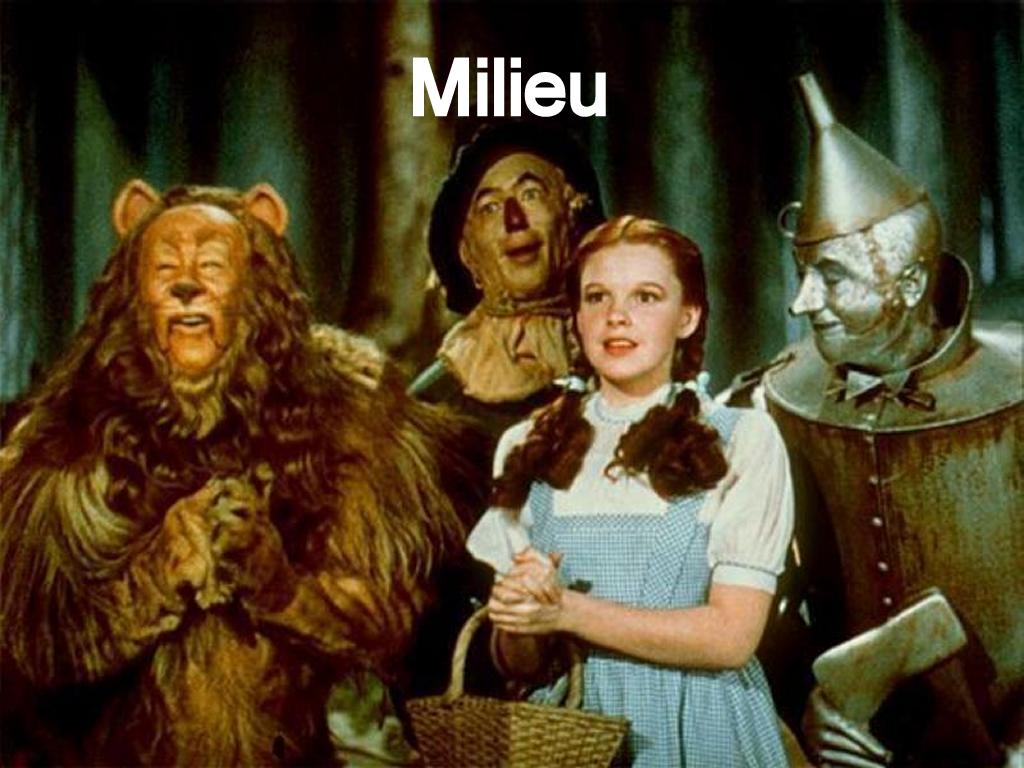
The Wizard of Oz is an example of the milieu story model.

Milieu:  The story begins when you enter a strange land. It ends when you leave. The Wizard of Oz, Gulliver’s Travels

Sherlock Holmes is an example of the idea story model.

Idea:  The story begins by raising a question. It ends when the question is answered. Sherlock Holmes and nearly every other mystery

Perks is an example of the character story model.

Character:  This story is about transformation. It begins when the main character becomes so unhappy in his present role that he begins the process of change. It ends when the character either settles into a new role or gives up the struggle and remains in the old role. The Perks of Being a Wallflower and most coming of age stories

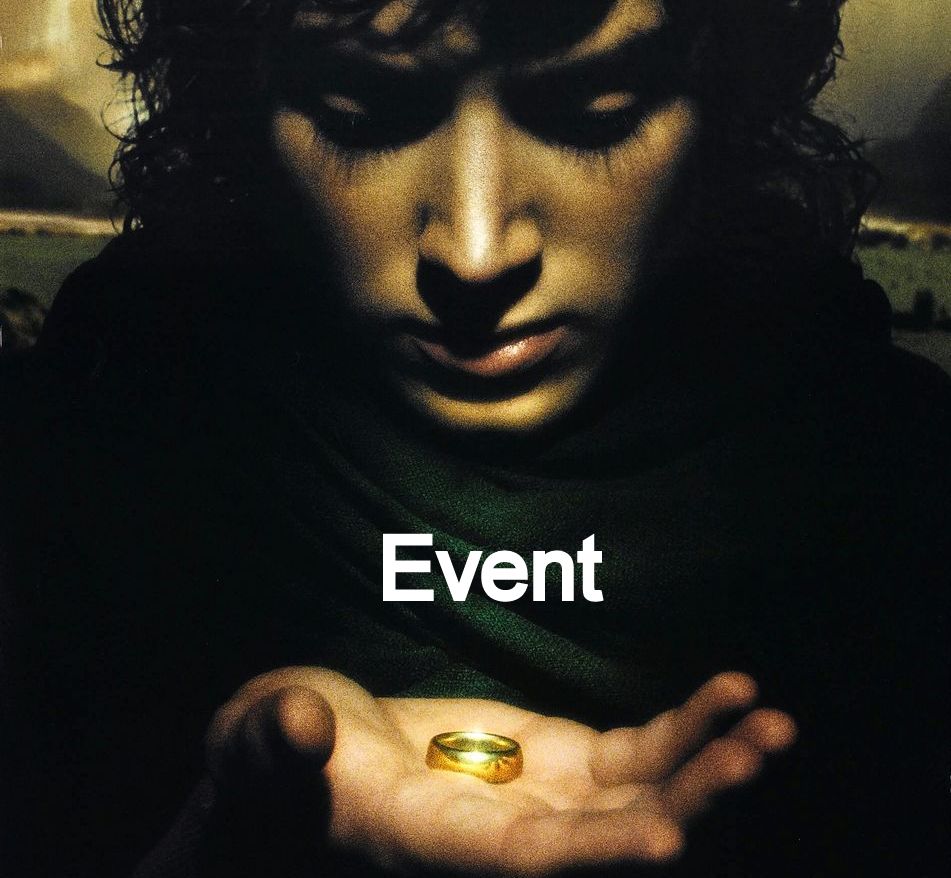
Lord of the Rings is an example of the event story model.

Event:  The world is out of order. This story begins not when the disorder starts, but when the character whose actions are most crucial to establishing the new order becomes involved in the struggle. It ends when a new order is established, the old order is restored, or the world descends into chaos and order is destroyed. Lord of the Rings and a kagillion other epic fantasies

The most important point to remember in plotting is to finish the story you started.  If you begin your story one way and end it another, you’ll frustrate your readers. Imagine if instead of solving the murder (idea), Holmes decided half way through to check into rehab, and the end of the book was about him conquering addiction (character). Bully for Holmes, but I want to know if the butler did it.  Likewise, how frustrating would Return of the King have been if Frodo decided instead of finishing his quest to destroy the ring (event), that after meeting Gollum he’d had enough adventure and headed back to his hobbit hole (milieu)?

Up Next:  Ten Tips from James Scott Bell’s Plot and Structure

Chuck Palahniuk Shares13 Writing Tips

Another great post from Mired in Mundanity. He always has great writing advice.

Madd_Fictional's avatarRhyScoRhys

http://static.guim.co.uk/sys-images/Film/Pix/pictures/2008/10/21/lee_palahniuk460.jpg

1. The egg timer method.  Two years ago, when I wrote the first of these essays it was about my “egg timer method” of writing.  You never saw that essay, but here’s the method:  When you don’t want to write, set an egg timer for one hour (or half hour) and sit down to write until the timer rings.  If you still hate writing, you’re free in an hour.  But usually, by the time that alarm rings, you’ll be so involved in your work, enjoying it so much, you’ll keep going.  Instead of an egg timer, you can put a load of clothes in the washer or dryer and use them to time your work.  Alternating the thoughtful task of writing with the mindless work of laundry or dish washing will give you the breaks you need for new ideas and insights to occur.  If you don’t know what…

View original post 1,161 more words